Base-16 Fiber Cabling System Supports 1.6Tbits/sec
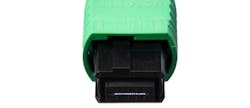
Panduit recently released its Base-16 Fiber Cabling System, which the company describes as a “groundbreaking product” that “delivers high performance, unparalleled speed, and reliability for hyperscale, artificial intelligence, machine learning, and high-performance computing applications.” The system is available worldwide and is available in singlemode and multimode options.
The Base-16 system supports native 400-Gbit/sec, 800G, and 1.6-Tbit/sec applications and includes breakout options to support configurations requiring 2x400G and 8x100G connectivity. It offers high bandwidth and breakout lane capabilities, and is used for applications with multiple fibers/channels for both transmit and receive.
At the same time Panduit introduced its Base-16 system, it also released its Base-8 Fiber Cabling System that supports speeds from 40G to 400G. “Dedicated to saving capital expenses, rack space, and power requirements, Base-8 fiber cables are extremely versatile and can be used in numerous settings including enterprise, colocation data center, multi-tenant data center or simple equipment closets,” the company said.
David Newman, product line manager for data center connectivity at Panduit, commented, “I am thrilled our Panduit Base-16 offering goes hand-in-hand with Base-8 to offer value and high bandwidth today as well as line up with future transceivers and bandwidth of 1.6T and beyond.”